18+ only. Fantasy cricket involves financial risk. Play responsibly and within your means. The PROG Act 2025 governs online real-money gaming in India.
How the Lock-Time Boundary Works in Practice Between News Reading and Team Lock
Two readers who both finish at the deadline, both submit a team, and both pass the source check can still leave the evening with different XIs. The difference is the boundary — the single moment news reading ends and team lock begins. Before the boundary the reader was still re-reading. After, the boundary held. Examples below are labelled as illustrations of the boundary discipline for a reader with one phone and one contest entry, not as live advice for any current fixture.
Filed 2026-08-05 · Evergreen reader guide · Examples labelled as illustrations

What this note covers
The reader's working method for the last thirty minutes before a contest locks: drawing the deadline mark on paper, running the final ten-minute read against the mark, deciding whether any candidate update crosses the mark, and either resubmitting or holding the verified XI. The boundary is the discipline that protects the four hours of reading that came before it. The companion how-to-play walkthrough covers the account-to-contest setup; this note covers the lock-time boundary itself, which sits at the end of that route.
The first step is to draw the deadline mark on paper
The boundary begins as a single horizontal line on the reader's contest page. The line is drawn at the deadline shown on the live contest screen, in IST, in a hand the reader will recognise tomorrow. Above the line, the reader writes the role slots and credit cap that the contest enforces. Below the line, the reader writes the moment the line was drawn, in IST, alongside a one-line note about what was being read at that moment. The line is not a metaphor; it is a physical artifact that the reader treats as the boundary between reading and locking.
A boundary drawn from memory fails the same way an unverified contest frame fails: the reader finishes the round with a fuzzy line, and a fuzzy line cannot defend itself against the last piece of news. A piece of late news is by definition the news that arrives after the reader would otherwise have stopped reading, and the only thing that protects the verified XI is a line the reader drew before the late news arrived. Drawing the line is a two-minute job. The cost of not drawing it is paid in resubmissions, in lost contest entries, and in the particular disappointment of an XI that the reader knew was right until the reader opened it again.
The final ten-minute read is bounded by the mark
With the line on the page, the reader runs a final read of the last ten minutes of cricket news, bounded by the line on both sides. Above the line: nothing. Below the line: every piece of news that arrived after the line was drawn. The reader treats the two regions differently. Items above the line were already on the page when the deadline mark was drawn; they have already been tested against the contest frame, the source check and the role ceiling. Items below the line have not.
The reader reads the items below the line with one question: does this item move any number in the contest frame by enough to justify a resubmission? The reader does not read these items for general interest. The reader does not read them to learn about the match. The reader reads them to test the verified XI. If the item moves a number, the reader writes the moved number on the page beside the line. If the item does not, the reader writes "no change" and moves on. The reader does not write the item itself on the page; the reader writes the number that the item moved, because the number is what the resubmission would change.
Figure 1 — Drawing the deadline mark on a contest printout

The figure shows the mark being drawn. The printout is the contest screen the reader captured ten minutes earlier; the line is being drawn at the deadline shown on that screen; the reader has written the IST moment beside the line. The role slots and credit cap are written above the line because they belong to the contest frame, not to the late news. The reader treats the line as a one-way door: anything above the line has already been through the source check, and anything below the line has not. The line is the moment that turns a queue of cricket news into a closed contest.
A candidate update either crosses the mark or it does not
A piece of late news that moves a number is not automatically a resubmission. The reader has a separate test for that: does the moved number justify the cost of a resubmission? The cost is the entry stake, the time already spent, the possibility that the resubmitted XI performs worse than the verified XI, and the loss of the next morning's audit trail, which is harder to write down when the XI changed in the last minute. The reader applies this cost test to every candidate update that moves a number, and the test is the same regardless of which number moved.
A piece of late news that does not move a number is held with a one-line reason. A piece of late news that moves a number but does not justify the cost is held with the moved number written on the page. A piece of late news that moves a number and justifies the cost is the only piece of late news the reader acts on; the reader resubmits, writes the resubmission time on the page beside the line, and continues. The reader treats the three outcomes as a single discipline: most late news is held, some is held with a reason, and a small fraction is acted on. The fraction is small because most late news arrives too late to be verified, and unverified late news is held by default.
The verified XI is not reopened once the mark has held
The hardest part of the boundary is not the late news itself but the temptation to reopen the verified XI. A reader who has spent four hours on a contest frame, a single-pass read and a source check has built a verified XI that the reader can defend the next morning. A piece of late news that the reader has not verified creates an opportunity to reopen the verified XI; the opportunity is a cost, not a benefit, because the reader's verified XI was already tested against the contest frame and the verified news items that came before it.
The reader treats the verified XI as closed once the deadline mark has held. The reader does not reread the contest frame to make sure the deadline was correct; the frame was verified when it was drawn. The reader does not recheck the source for every news item on the page; the sources were verified when the items were added. The reader does not reopen the role ceiling to see whether a held item would have changed it; held items were held for a reason. The boundary is a one-way door, and the reader walks through it once.
Figure 2 — The final read at dusk, after the boundary has held
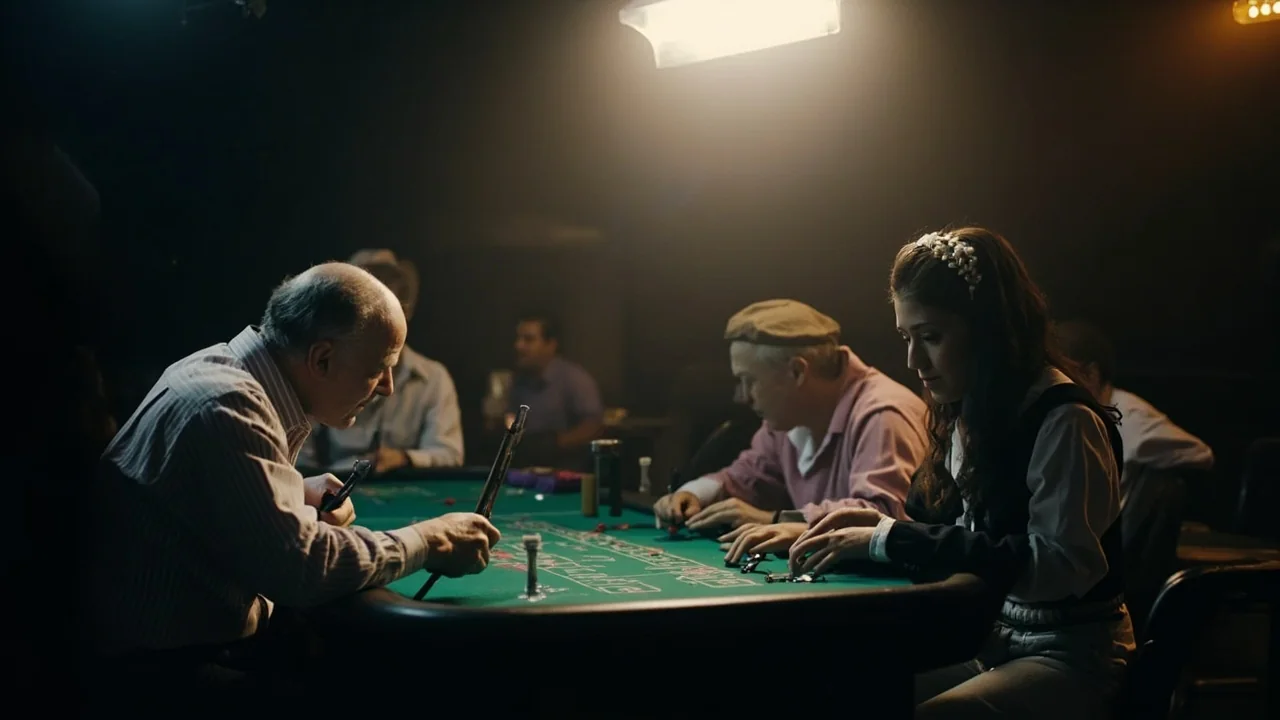
The figure shows the desk after the boundary has held: the contest notebook is closed, the phone is face-down, the coffee cup is half-finished and the paper team sheet is folded. The reader has left the desk. The verified XI is on the contest platform; the contest frame is on the same page as the deadline mark; the late news that arrived after the mark has been written into the page in three categories (no change, moved number, resubmitted). The next morning's audit trail reads from top to bottom: contest frame, single-pass read, source check, deadline mark, final ten-minute read, lock or hold. The audit trail is the boundary's residue.
Why the small-budget reader benefits most from the boundary
A reader with twenty contest entries per match day can absorb a boundary failure by averaging across the field. A reader with one contest entry cannot. The small-budget reader's worst case is a verified XI reopened because of a piece of late news the reader did not have time to verify, locked again under pressure, and lost on a contest the reader had already won on the verified XI. The boundary is sized to the small-budget reader because the small-budget reader pays the full cost of every boundary failure, and the boundary's job is to make boundary failures rare rather than common.
The boundary also helps the larger-budget reader, but the cost of a boundary failure is smaller for them. The small-budget reader treats the boundary as a forcing function. The reader who treats the boundary as optional is a reader who has not yet had a single contest slot go wrong on a late piece of news; the reader who treats the boundary as mandatory has. The difference shows up the morning after, when the audit trail either names the boundary as the moment the verified XI became a locked XI, or does not.
Two failure modes the reader names in advance
First, the boundary fails when the deadline mark is drawn from memory rather than from the live contest screen. A contest deadline that has shifted by two minutes, a deadline that the reader wrote down in the wrong time zone, or a deadline the reader rounded to the nearest five minutes will silently break the boundary, and the reader will read against a mark that no longer matches the contest. The fix is to draw the mark from the live screen at the moment the reader begins the final read, not from the reader's recollection of the contest frame. The reader treats the mark as a fresh artifact, drawn once, at the boundary's own moment.
Second, the boundary fails when the cost test is applied selectively — applied only to the late news that confirms the reader's prior read, and skipped on the late news that contradicts it. The failure is the more common one because the reader's prior read has emotional weight. A piece of late news that contradicts the prior read is the one that most needs the cost test; it is also the one the reader is most likely to skip. The fix is to apply the cost test to every piece of late news that moves a number, regardless of direction. The reader treats the test as a uniform operation, not a selective one.
Three files the reader keeps beside this one
Readers who want to extend the boundary into the rest of the contest week can pick up three adjacent files. The points-system reference explains how the scoring system in the contest frame changes which cricket news items actually move numbers at the boundary. The captain-pick file explains how the role ceiling is read against the verified XI so a piece of late news does not reopen the captain multiplier without a verified source. The predictions file explains how the venue note and the confirmed XI together produce a working prediction range that the boundary can be tested against. None of those files replaces this one; they extend it.
The order the reader recommends for a new reader is the points-system reference first (so the scoring field is fixed before the boundary), then this boundary note (so the deadline mark is fixed), then the captain-pick file (so the role ceiling is fixed before the final read), and finally the predictions file (so the venue-and-XI frame is fixed). The four files together form the reader's working method for the last thirty minutes before a contest locks. Reading them in any other order is fine, but the desk's own writing follows that order because each file assumes the previous one's vocabulary.
A short checklist the reader runs inside the boundary
Inside the boundary the reader runs a four-line checklist on the same page as the deadline mark. Line one: the mark on the page matches the deadline on the live screen at the moment the final read began. Line two: every piece of late news that arrived after the mark has been categorised as no change, moved number, or resubmitted, with the IST moment written beside each entry. Line three: any resubmitted XI has been verified against the contest frame, the source check and the role ceiling before the lock. Line four: the cost of being wrong on the resubmission has been written on the page, in the same hand as the mark. A boundary that fails any of the four lines is a boundary that needs another minute, not another headline.
The same four-line checklist can be written at the bottom of the contest page in a single evening, in the order given, without any extra time beyond the final read the reader already ran. The reader's recommendation is to keep the checklist on the same page as the deadline mark so that the next morning's audit trail can read the boundary as a single artifact. A checklist on a separate page is a checklist the reader will not run, and a checklist the reader does not run is a checklist that does not protect the verified XI.
Disclaimer. CrickBet is an editorial notebook about fantasy cricket. The site does not operate a real-money gaming platform and does not process deposits or withdrawals. References to fantasy contests describe publicly known contest formats from licensed operators. Fantasy cricket involves financial risk; only individuals aged 18+ and resident in eligible Indian states should participate. Please refer to the Public Online Gaming Act 2025 and your state's rules for current eligibility. This note is an evergreen reader guide; examples labelled as illustrations describe a boundary discipline rather than a current event.