Reading black soil after sunset
A working essay on observation, humidity and phase-specific uncertainty.
18+ only. Fantasy cricket involves financial risk. Play responsibly and within your means. The PROG Act 2025 governs online real-money gaming in India.
Long-form pieces slow the match down: surface, phase, role, scoring and evidence are considered before the selection conclusion.
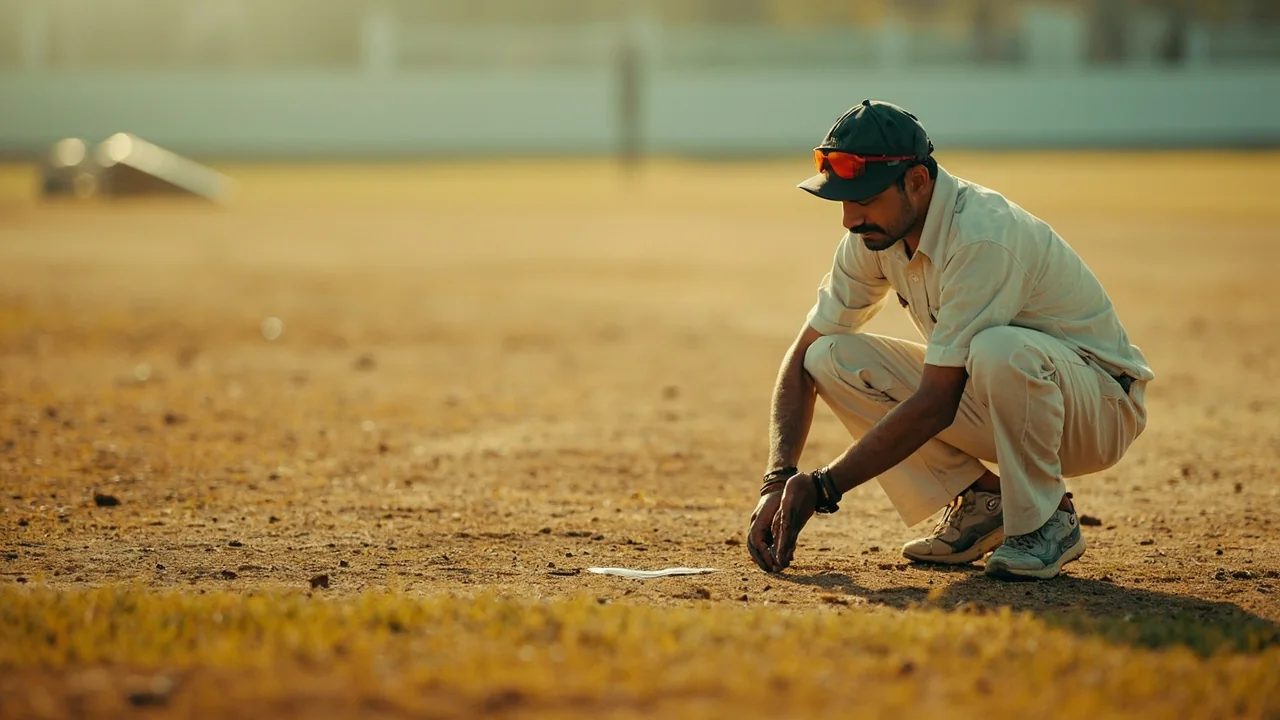
A working essay on observation, humidity and phase-specific uncertainty.
Role ceiling, correlation and the evidence needed to retain a captain.
Why three selected seamers can hold three very different point routes.
newsroom notes · prediction process · selection desk · season archive
Three working essays anchor the opening archive. “Reading black soil after sunset” links to the Wankhede field note and expands how humidity, dew and boundary shape can change phase value. “Multiplier without mythology” links to the captain note and studies role ceiling, correlation and scoring. “The powerplay allocation ledger” links to Mumbai’s seamer rotation and follows new-ball overs through a lineup. These are live article stubs rather than invented completed investigations; each points to the current filed note and will retain its eventual stable URL.
The pitch archive records observation date, venue, strip position where known, soil description, grass, weather, toss, innings scores, wicket phases, and how the surface changed. It avoids declaring a ground permanently flat or slow. Wankhede, Chepauk, Eden Gardens, Chinnaswamy and Arun Jaitley can each produce different games across strips and seasons. Curator comments are attributed, and small samples are labelled. The aim is to improve the next question, not turn a past score into a law.
Role essays trace batting position, expected entry over, powerplay share, spin match-up, overs allocation, death use, keeper involvement, and impact-player pathway. The archive compares the pre-match forecast with actual use. A correct result from an unsupported role call does not earn a pass; a low score in the forecast role does not automatically fail. This discipline prevents hindsight from converting every winner into an obvious pick. It also identifies coaching or squad changes before headline form catches up.
Ownership is treated as a strategic input after the cricket case. Long-form notes compare small fields, Head-to-Head, Classic leagues, and Mega structures without pretending a payout table removes risk. They ask how much deviation is needed, which popular role is genuinely fragile, and whether a differential directly benefits from the projected change. A contrarian team made entirely from weak roles is not sophisticated. The archive records public percentages with timestamps because they move close to lock.
Monday is reserved for scoring and process review. Midweek entries examine venue, squad and role trends. Match days carry shorter pre-toss notes, toss updates, and post-match assumption checks. Monthly pieces review corrections, legal-source changes, app-safety observations, and reader questions. The calendar is a working plan, not a promise that every slot will publish. If evidence is weak, the desk would rather leave a gap than fill it with generic copy.
Every essay separates observation, source, inference, and opinion. Numbers receive a date and competition context. Quotations need an accountable origin. Unknowns stay unknown. The desk avoids guaranteed outcomes, fake authority, private medical speculation, unattributed legal claims, and invented product details. Affiliate status is disclosed by link attributes and the site disclaimer. An editorial piece may compare contest mechanics but does not advise a reader to exceed a loss limit or enter from an ineligible state.
Material corrections state what changed and when. A new toss fact can update a pre-match note without erasing its original time. Legal updates cite the official instrument and commencement status. Statistical corrections identify the source and affected conclusion. Readers can submit precise corrections through the contact policy. The board does not remove accurate caution merely because a commercial party dislikes it. Version history protects both the subject and the reader from silent rewriting.
Begin with the filing date and scope. Follow the linked scoring, prediction or captain method if a term is unfamiliar. Distinguish an example calculation from a live operator rule. Check whether the XI and toss were known. For legal or product-safety material, return to the current government or operator source. The archive is a notebook, so old entries remain valuable as records of process even when their match-day conclusion is no longer actionable.
Long-form publication is not measured by length alone. A piece should add sourced observation, a reproducible calculation, a role comparison, or a correction to the archive. If it cannot, the calendar slot remains empty.
Long-form work benefits from the same discipline. A published essay should be re-read in the following week, and any changed fact should be marked with a dated note. Old paragraphs should not be silently rewritten to remove embarrassing predictions. They can be edited to add context, but the prediction should remain visible. The blog is a notebook, not a brochure. A reader who returns a year later should be able to see what the desk knew and when. The blog's archive is part of the desk's authority. The desk would rather lose the polish of a smooth retelling than lose the credibility of a dated, traceable record.
Long-form work benefits from the same discipline. A published essay should be re-read in the following week, and any changed fact should be marked with a dated note. Old paragraphs should not be silently rewritten to remove embarrassing predictions. They can be edited to add context, but the prediction should remain visible. The blog is a notebook, not a brochure. A reader who returns a year later should be able to see what the desk knew and when. The blog's archive is part of the desk's authority. The desk would rather lose the polish of a smooth retelling than lose the credibility of a dated, traceable record. A dated record is the desk's promise to the reader.
Long-form work benefits from the same discipline. A published essay should be re-read in the following week, and any changed fact should be marked with a dated note. Old paragraphs should not be silently rewritten to remove embarrassing predictions. They can be edited to add context, but the prediction should remain visible. The blog is a notebook, not a brochure. A reader who returns a year later should be able to see what the desk knew and when. The blog's archive is part of the desk's authority. The desk would rather lose the polish of a smooth retelling than lose the credibility of a dated, traceable record. A dated record is the desk's promise to the reader. The promise does not require that the desk be right on the first date. The promise requires that the desk be honest about the first date. Honesty is harder than accuracy. Accuracy is a function of available evidence. Honesty is a function of how the desk records the available evidence. A blog that records the wrong date is not a useful blog, even if the rest of the blog is correct. A blog that records the right date but the wrong conclusion is a useful blog, because the date lets the reader compare the conclusion with the later evidence and see what changed. The blog is a notebook, not a brochure. A brochure sells. A notebook records. The desk's record is what the reader is reading. The record's accuracy, dated, is the desk's contribution. The reader's contribution is the personal budget, the personal notes, the personal record. The two records, together, are the season.
The blog archive is the long-form companion to the news index. The archive contains editorial pieces that survive beyond the news cycle: pitch reads, selection angles, tournament formats. The archive does not contain match previews, post-match reviews, or news notes — those belong in the news index.
Pieces that survive into the archive are pieces that remain useful months or years after publication. A pitch-read method, a selection-angle framework, a tournament-format walkthrough — all remain useful as the underlying categories recur. The desk publishes the archive with the intent that a reader who finds a piece two years after publication will still find it useful.
Pieces that do not survive into the archive are pieces tied to a specific match or a specific date. A match preview, a post-match review, a state-rule update — all are tied to a moment in time and lose value as time passes. The desk publishes those as news notes, not as blog posts.
The archive is searchable by category and date. The category taxonomy is small: pitch reads, selection angles, tournament formats, methodology. The desk does not publish a more granular taxonomy because the small taxonomy is what readers actually use.
The desk updates pieces in the archive when the underlying data changes. The update is appended in-line with a dated note; the original piece is not deleted. The desk's note: a piece that has been updated three times is more useful than three separate pieces, because the updates preserve the editorial reasoning.
Disclaimer. CrickBet is an editorial notebook about fantasy cricket. The site does not operate a real-money gaming platform and does not process deposits or withdrawals. References to fantasy contests describe publicly known contest formats from licensed operators. Fantasy cricket involves financial risk; only individuals aged 18+ and resident in eligible Indian states should participate. Please refer to the Public Online Gaming Act 2025 and your state's rules for current eligibility.